
United States Regiments & Batteries > Wisconsin > 36th Wisconsin Infantry Regiment
The 36th Wisconsin Volunteer Infantry Regiment originally mustered 990 men, adding 24 more recruits during the war for a total strength of 1,014. It lost 7 officers and 150 enlisted men killed or mortally wounded and 3 officers and 182 enlisted men to disease during the Civil War.
| 1864 | |
Organized at Camp Randall in Madison, Wisconsin under the command of Colonel Frank Haskell, Lieutenant Colonel John A. Savage, Jr., and Major Harvey M. Brown.
Organization of the Regiment
|
|
| March 23 | The 36th Wisconsin Infantry Regiment mustered in for three years Federal service. |
| May 10-14 | Moved to Washington, D.C. |
| May 14-18 | Transprted down the Potomac to Belle Plaine Landing, then marched via Fredericksburg to join the army at Spotsylvania Court House. |
| May 18-21 |
Battle of Spotsylvania Court HouseThe regiment was in reserve. Attached to 1st Brigade, 2nd Division, 2nd Corps, Army of the Potomac. |
| May 23-26 |
North Anna RiverAssigned to support a battery and constructed breastworks. Crossed the North Anna River on the 24th and joined the line of battle, constructing works. Companies H & K attacked and captured a line of enemy works, losing two men killed. |
| May 26-28 | Withdrew across the Pamunkey, losing two men killed and four wounded to a shell. |
| May 28-30 |
Bethesda ChurchMoved into position on an open plain facing an enemy line in a woods, losing one man killed and four wounded. |
| June 1 |
Bethesda Church (continued)Companies B, E, G & F advanced as skirmishers to support the main attack by the army some distance to the left. Veteran regiments on both flanks advanced only a short distance, fired a volley, and fell back, leaving the 36th Wisconsin advancing in the open with no support. The Confederate skirmishers were driven in and part of their defences captured, but the regiment lost about half of the 240 men engaged in the attack. Captain Prescott B. Burwell of Company F was mortally wounded and captured, Lieutenant Newton was wounded and captured, and Captain Reuben Lindley of Company G was wounded. That night the regiment marched to Cold Harbor, arriving early on the morning of the 2nd. |
| June 3 |
Battle of Cold HarborThe whole Union line attacked in the morning in mass columns of regiments. The 36th was in the rear of its brigade column. The attack was made across an open field against Confederate positions that were on the crest of a small hill, and were under artillery fire the entire way. The brigade commander, Colonel McKean, was killed and Colonel Haskell took command, bringing the 36th to the front of the attacking column. Enemy fire made further a advance, and the rest of the Union line was going to ground. Just as Colonel Haskell gave the order to lay down a bullet hit him in the head, killing him instantly. The regiment scraped up small breastworks and remained on the field, unable to retreat under the heavy fire, under the command of Lieutenant Colonel John A. Savage. After dark they withdrew about 600 feet to the left rear, remaining in that position until the 12th. |
| May 26-June 7 |
Casualties from May 26-June 7
|
| June 11 |
|
| June 14 | Marched to Charles City Court House, then moved by transports across the James River and marched to Petersburg. |
| June 16-18 |
Grant’s First Assault on PetersburgThe regiment moved into the first line of enemy trenches on the 16th after they had been captured by the Union attack. Was in reserve on the 17th. On the 18th formed line of battle and drove Confederate skirmishers from their works, driving them a mile through heavy woods and to the main enemy works. Lieutenant Galloway of COmpany K was wounded at this time. The attack was resumed that afternoon. Colonel John Savage led the men over the Confederate breastworks and was mortally wounded. Over a third of the regiment was killed or wounded. Only the 36th Wisconsin had advanced into the enemy works. It was impossible to advance or retreat, so the men dropped to the ground and used their tin plates to scrape protective cover until night fell and they could withdraw. Captain Clement E. Warner took command of the survivors of the regiment.
|
| June 18 |
Siege of Petersburg |
| June 22-23 |
Weldon RailroadMarched several miles to the left along the Jerusalem Plank Road and threw up earthworks in front of the Confederate lines. The regiment escaped being captured like half of its brigade by changing direction by the left flank, but lost some men killed and wounded. |
| June 27 | First Lieutenant George Weeks was promoted to Captain of Company B. |
| July 12 | Captain Daniel F. Ferrand of Company I resigned. |
| July 15 |
|
| July 22 |
|
| July 24 | The 36th Wisconsin was relieved and fell back two miles to a rest camp, enjoying its first good night sleep in four weeks. It spent the next month there, picketing and building roads and fortifications. |
| July 27-29 | The regiment took part in a demonstration north of the James River to draw Confederate forces away from the part of the line where a mine was to be exploded. They crossed the Appomattox on a floating bridge and marched to near the 1862 Malvern Hill battlefield. |
| July 27-28 |
Battle of Deep BottomSeveral Confederate guns were captured. After Confederate forces responded, the Second Corps quietly marched away, recrossed the river and moved to support the mine explosion and Union attack, which was a failure. The regiment returned to its camping ground and was assigned light duties for two weeks. |
| August 12-20 |
Demonstration north of the James at Deep BottomOn August 13 the regiment took part in another attempt to draw Confederate troops away from a Union attack, this time on the far left flank of the Union line. |
| August 14-18 |
Strawberry Plains (Second Battle of Deep Bottom)The Second Corps marched to City Point and embarked on transports which sailed downriver until dark, then turned around and moved up river to Deep Bottom, where the men disembarked. They advanced up the New Market Road toward Richmond until they encountered Confederate earthworks, which they charged. The fighting eventually died out due to exhaustion and the extreme heat, but the Union objective was successful, allowing the Fifth Corps to capture the Weldon Railroad.
Captain Austin Cannon took command of the regiment as senior officer. |
| August 22 | The Second Corps returned to the Petersburg lines. |
| August 24 | The Second Division moved to the left and constucted breastworks on the Weldon Railroad at Ream’s Station. |
| August 25 |
Ream’s StationThe 36th Wisconsin Infantry Regiment was posted as a reserve in a railroad cut. Confederate attacks broke the Union line, and the 36th Wisconsin was surrounded and unable to escape due its position in the cut. Of the 175 men who went into the fight only 3 officers and 45 men were available the next morning.
|
| August 26 | Moved to Fort Bross |
| August 29 | Captain Warren Graves of Company K died of disease near Petersburg. |
| September | Captain Jerome F. Brooks went on detached service to Elmira, New York. He would not return to the regiment but resigned on disability. |
| September 3 | Second Lieutenant Oscar L. Baldwin of Company D died of disease in Washington. |
| September 25 | Posted to the front lines between Fort Stedman and Fort Haskell. Captain George A. Fisk of Company C returned to take command of the regiment as senior captain. |
| September 30 | Captain Jacob Walkey of Company D resigned. |
| October 24-27 | Left the front line and marched to near Haskell’s Run. |
| October 27-28 |
Boydton Plank Road, Hatcher’s RunCompany A was sent out as skirmishers, driving back the Confederate picket line and capturing their rifle pits. An attack on the rear of the Corps caused the Third Division to break and threatened to surround the brigades in front. Captain George Fisk faced the regiment to the rear and launched a bayonet charge on the enemy’s flank, causing them to break and run. They captured a large number of prisoners and a stand of colors at a loss of 15 men wounded or captured. Brigadier General Thomas Egan, commanding the division, wrote to the Governor of Wisconsin about the 36th Wisconsin, stating that it had “captured a larger number of prisoners than it had men engaged” and praising Captain Fisk for his gallantry. Lieutenant Colonel Harvey M. Brown was discharged due to his wound from June 18. |
| October 29 | The regiment returned to its camp and resumed picket and fatigue duty. |
| November 1 | The 36th Wisconsin received a new set of National colors. |
| November 28 | First Lieutenant Wesley S. Potter was promoted to Captain of Company D. |
| December | Lieutenant Colonel Clement Warner, Major William Hamilton, Captain Russell, and Lieutenant Morris returned to the regiment after partially recovering from their woods, and Adjutant Benjamin Atwell returned from Libby Prison. |
| December 22 | First Lieutenant Joseph R. Ellis was promoted to Captain of Company K. |
| December 30 | Captain Ephraim W. Heydon of Company I resigned. |
| 1865 | |
| February 5-7 |
Dabney’s Mills, Hatcher’s RunThe Second Corps broke camp and marched to Hatcher’s Run, encountering the enemy at Dabney’s Mills. Three men were wounded and two captured on the picket line, while the rest of the regiment was exposed to heavy artillery fire. After the enemy were driven back the regiment constructed winter quarters. |
| March 25 |
Watkins’ HouseThe Second Corps made a strong demonstration. |
| March 28-April 9 |
Appomattox Campaign |
| March 29 |
Hatcher’s RunThe 36th Wisconsin Infantry Regiment broke camp, crossed Hatcher’s Run, and captured the first line of Confederate earthworks. |
| March 30-31 |
Boydton Plank Road and White Oak RoadThe regiment continued to advance, capturing a second line of works. |
| April 1 | The right wing of the regiment under Major William Hamilton advanced to within 600 feet of the Confederate forts. Five men were wounded to heavy artillery fire. |
| April 2 |
Fall of PetersburgThe left wing of the regiment under the command of Captain Cameron captured part of the enemy’s works, including 150 prisoners and three guns. The men continued to advance, capturing stragglers and learning the entire Confederate line had collapsed. |
| April 3-9 | Pursuit of Lee |
| April 6 |
Sailor’s Creek |
| April 7 |
High Bridge and FarmvilleThere was a short skirmish with an enemy rearguard at the bridge, and a larger skirmish that evening at Farmville. |
| April 9 |
Appomattox Court HouseSurrender of Lee and his army. |
| May 2-14 | Moved to Washington, D.C. via Richmond. |
| May 7 |
The photo shows Lieutenant Colonel Warner before he lost his left arm at the Second Battle of Deep Bottom on August 14, 1864. |
| June 17-21 | Moved to Louisville, Ky. and went into camp at Jeffersonville. |
| July 12 | The 36th Wisconsin Infantry Regiment mustered out 445 men at Jeffersonville under the commaand of Lieutenant Colonel Clement E. Warner and Major William H. Hamilton, then left by rail for Wisconsin. |
| July 14 | The men arrived at Madison and were paid off and discharged. |
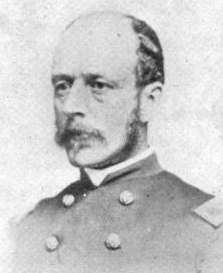 Colonel Frank Haskell had been General John Gibbon’s Aide at the Battle of Gettysburg, where Gibbon’s men faced Pickett’s charge on July 3. Gibbon wrote, “I have always thought that to him, more than to any one man, are we indebted for the repulse of Lee’s assault.”
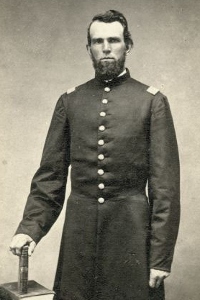 Lieutenant Colonel Clement E. Warner was promoted to Colonel but was not mustered and would be discharged as a Lieutenant Colonel.