
United States Regiments & Batteries > Michigan > 17th Michigan Infantry Regiment
The 17th Michigan Infantry Regiment enrolled 1,224 men during the Civil War. It lost 84 men killed in action and 48 who were mortally wounded. Of the 84 men who died of disease, 54 men died in Confederate prisons.
The regiment is honored by a marker at Fox’s Gap at South Mountain and a monument on the Spotsylvania battlefield.
Eight members of the 17th Michigan were awarded the Medal of Honor for gallantry during the Civil War.
|
1862
|
|
| August 8 to 22 | The 17th Michigan Infantry Regiment was organized at Detroit, Michigan, under the command of Colonel William Withington and Lieutenant Colonel Constance Luce. Colonel Withigton earned the Medal of Honor at Bull Run where he was wounded and captured while serving as a captain in the 1st Michigan Infantry. |
| August 27 | Left Michigan for Washington, D.C. Attached to 1st Brigade, 1st Division, 9th Corps, Army of the Potomac |
| September 6-22 |
Maryland Campaign |
| September 14 |
Battle of South MountainFrom the marker on South Mountain:The fighting began around 9:00 a.m. just south of this site. Around noon a Confederate battery opened fire on the regiment, which was supporting Cook’s Massachusetts Battery. The 17th held its position for several hours. At 4:00 p.m. the command ws given for an assault along the entire Union line. The Confederates came out of the woods to meet the charge at a fence line in the middle of the field, then moved back to the stone walls along the crest of the hill. The 17th advanced and captured the stone walls. Of the 500 men of the “Stonewall Regiment” engaged in battle here, 27 were killed and 114 wounded, many mortally. The Regiment was afterwards known as the “Stonewall Regiment” for its actions. Colonel Withington was breveted brigadier general for “conspicuous gallantry.” |
| September 16-17 |
Battle of AntietamFrom the War Department marker for Christ’s Brigade along Rodman Avenue at Antietam:On the morning of the 17th Christ’s Brigade was in reserve on the eastern slope of the ridge on the left bank of the Antietam, nearly opposite the Burnside Bridge. About 2 P.M., after Sturgis’ Division had carried the bridge, the Brigade crossed and, following the stream and road to Sharpsburg, filed to the right where the course of the former diverged to the east and formed line on the narrow plateau at the foot of the bluff southeast of this point. After the formation of the Corps line, the Brigade advanced, under a heavy fire from Cemetery Hill and the high ground west of the road, to within a few yards of this point where it was checked. After a short delay the 79th New York advanced as skirmishers and compelled the Confederate Artillery to retire. The Brigade was about to move forward, when the attack of A.P. Hill on the left of the Corps obliged it to fall back to the Antietam, where it remained until the evening of the 18th, when it was relieved by Morell’s Division of the Fifth Corps. |
| September -October | Duty in Maryland |
| October 30- November 18 |
Movement to Falmouth, Virginia. |
| December 12-15 |
Battle of Fredericksburg |
|
1863
|
|
| January 20-24 | “Mud March” |
| February 14 | Moved to Newport News, Va. |
| March 21 | Colonel Withington resigned. Lieutenant Colonel Luce was promoted to colonel. |
| March 19 | To Louisville, Kentucky. |
| March 29 | To Bardstown, Kentucky. |
| April 3 | To Lebanon; Assigned to the Army of the Ohio |
| April 29 | To Columbia, then Jameston, Kentucky. |
| June 4 | Assigned to the Army of the Tennessee |
| June 4-12 | Moved to Vicksburg, Miss. |
| June 14-July 4 |
Siege of Vicksburg |
| July 4-10 | Advance on Jackson, Mississippi. |
| July 10-17 |
Siege of Jackson |
| July 18-20 | Destruction of Mississippi Central Railroad at Madison Station. |
| July 21 – August 3 | At Milldale |
| August | Assigned to 3rd Brigade, 1st Division, 9th Corps, Army of the Ohio |
| August 3-24 | Moved to Covington and Crab Orchard, Ky. |
| September 10-26 | Marched to Knoxville, Tennessee. |
| October 10 |
Action at Blue Springs |
| October 20 to November 14 |
Duty at Lenoir |
| November 4- December 24 |
Knoxville Campaign |
| November 14 | Lenoir Station |
| November 16 |
Battle of Campbell’s StationThe regiment was in the rearguard of the corps for Burnside’s retreat toward Knoxville when it was attacked by advanced units of Longstreet’s army. After heavy fighting in which there were many casualties and three color bearers had been killed or wounded, the regiment was demoralized and about to break when the Confederates launched another charge. Lieutenant Colonel Frederick Swift seized the colors and rallied the regiment to him, then fired a volley which threw back the Confederate charge. The regiment lost 7 men killed, 19 wounded and 10 missing. Two members of the regiment were awarded the Medal of Honor for their actions in the fight:
Lieutenant Colonel Frederick Swift “Gallantly seized the colors and rallied the regiment after three color bearers had been shot and the regiment, having become demoralized, was in imminent danger of capture.” |
| November 17- December 5 |
Siege of KnoxvilleThree men were awarded the Medal of Honor for their actions on November 20:
Corporal Irwin Shepherd and Private Andrew John Kelley, both of Company E, “Having voluntarily accompanied a small party to destroy buildings within the enemy’s lines whence sharpshooters had been firing, Kelley disregarded an order to retire, remained, and completed the firing of the buildings, thus insuring their total destruction; this at the imminent risk of his life from the fire of the advancing enemy.” |
| November 29 |
Fort SaundersRepulse of Longstreet’s assault |
| December | Operations in East Tennessee |
|
1864
|
|
| January | Assigned to 2nd Brigade, 1st Division, 9th Corps, Army of the Ohio |
| March 17-April 5 | Moved to Nicholasville, Ky., thence to Annapolis, Maryland, where 200 New recruits joined the regiment. |
| April | Attached to 1st Brigade, 3rd Division, 9th Corps, Army of the Potomac |
| May 4-June 15 |
Campaign from the Rapidan to the James River |
| May 5-7 |
Battle of the WildernessThe regiment began the campaign with 225 officers and enlisted men. It lost 7 men killed and 39 wounded. |
| May 8-21 |
Battle of Spotsylvania Court House |
| May 10 | Ny River |
| May | Served as acting Engineers, 3rd Division, 9th Corps, Army of the Potomac. |
| May 12 |
Assault on the SalientFrom the monument to the 17th Michigan Infantry on the Spotsylvania battlefield:At 2 p.m., May 12th, two Ninth Corps brigades were ordered to attack the Confederate works one-quarter mile southeast of this spot. The 17th Michigan was on the extreme left of the Federal line. As the regiment approached its objective, Brig. Gen. James Lane’s North Carolina Brigade emerged from the thick woods and struck it on the left flank. In the bloody hand-to-hand fighting that followed, the 17th Michigan lost its national colors and 189 of the 225 men it carried into battle. Three soldiers later received the Medal of Honor for their brave but unsuccessful efforts to save the colors.
Sergeant Daniel McFall “Captured Colonel Barker, commanding the Confederate brigade that charged the Union batteries; on the same day rescued Lieutenant George W. Harmon of his regiment from the enemy.” Sergeant Charles Augustus Thompson “After the regiment was surrounded and all resistance seemed useless, fought singlehanded for the colors and refused to give them up until he had appealed to his superior officers.” Surrounded by greatly superior forces, the regiment was forced to surrnder. Lieutenant Colonel Frederick Swift was captured along with the survivors of the regiment, which lost 23 men killed, 73 wounded and 93 taken prisoner |
| May 23-26 |
North Anna RiverThe badly understrength regiment was designated an engineer unit. It would retain that designation for the rest of the year. |
| May 23-24 |
Ox Ford |
| May 26-28 | On line of the Pamunkey |
| May 28-31 |
Totopotomoy |
| June 1-12 |
Battle of Cold Harbor |
| June 1-3 |
Bethesda Church |
| June 16-18 |
First Assault on Petersburg |
| June 16 |
Siege of Petersburg begins |
| July 30 |
Mine Explosion, Petersburg |
| August 3 | Lieutenant Colonel Frederick Swift was exchanged and released from Confederate prison in Macon, Georgia. |
| August 18-21 |
Six Mile House, Weldon Railroad |
| September | Acting Engineers, 1st Division, 9th Corps |
| September 29- October 2 |
Poplar Springs Church |
| October 8 | Reconnoissance on Vaughan and Squirrel Level Roads |
| October 27-28 |
Boydton Plank Road, Hatcher’s Run |
| December 1 | Colonel Luce was honorably mustered out. |
|
1865
|
|
| February 25 | Colonel Luce was found guilty by court martial of presenting a false claim against the government. He would spend several months in Old Capitol Prison in Washington D.C. before his sentence was remitted. |
| March 25 |
Fort Stedman, Petersburg |
| March 28-April 9 |
Appomattox Campaign |
| April 2 |
Fall of Petersburg |
| April | Attached to 1st Brigade, 1st Division, 9th Corps |
| April 3 |
Occupation of Petersburg |
| April 3-9 | Pursuit of Lee |
| April 24-27 | Moved to Alexandria, Va. |
| May 23 | Grand Review |
| June 3 | The 17th Michigan Infantry Regiment mustered out |
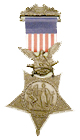 Private Joseph Brandle, “While color bearer of his regiment, having been twice wounded and had the sight of one eye destroyed, Brandle still held to the colors until ordered to the rear by his regimental commander.”