
United States Regiments & Batteries > Michigan > Seventh Michigan Cavalry Regiment
The Seventh Michigan Cavalry Regiment lost 4 officers and 81 enlisted men killed and mortally wounded and 2 officers and 256 enlisted men by disease, a total of 343. The regiment, along with the other regiments of the Wolverine Brigade, is honored by a monument at Gettysburg.
From the monument to the Michigan Cavalry Brigade at Gettysburg:
Seventh Michigan Cavalry Regiment Mustered in at Grand Rapids, Mich. Jan. 16, 1863. Mustered out at Fort Leavenworth, Kas. Dec. 16, 1865. Total enrollment 1779 officers and men. Killed 2 officers 47 men. Died of wounds 2 officers 24 men. Died of disease 1 officer 246 men. Total casualties 322. Participated in 56 skirmishes and general engagements from Hanover, Pa. June 30, 1863 to Appomattox, Va., April 9, 1865.
AugustOrdered to Washington, D.C. Assigned to 1st Brigade, 1st Division, Cavalry Corps, Army of the Potomac
|
1862
|
|
| September 24 & 25 | Volunteers from Niles and Battle Creek arrived in Grand Rapids. They were left over from the formation of the Sixth Michigan Cavalry Regiment, which was then underway. The men were formed into what would become Company A. |
| October 13 | Company A was mustered in at Lee Barracks in Grand Rapids. |
| October 14 | John S. Huston was appointed Major. |
| October 15 |
|
| October 27 | Farnham Lyon was appointed First Lieutenant and Quartermaster. |
| November 4 | Colonel William D. Mann arrived to assume command of the Seventh Michigan Cavalry. Mann had been a Captain in the First Michigan Cavalry Regiment, and had experience fighting “Stonewall” Jackson’s cavalry under the legendary Colonel Turner Ashby in the Shenandoah Valley. With the support of General Hatch and Secretary Stanton, Mann raised what became the Fifth Michigan Cavalry Regiment and the 9th Michigan Battery in just over a week, becoming Lieutenant Colonel of the 5th Michigan Cavalry. He then left to raise and assume command of the Seventh as Colonel. |
| November 14 | Captain Allyn C. Litchfield of thr Fifth Michigan Cavalry Regiment transferred to the Seventh Michigan Cavalry and was promoted to Lieutenant Colonel. |
| November 26 | First Lieutenant Heman Moore of the Eighth United States Infantry transferred to the Seventh Michigan Cavalry and was promoted to Captain of Company K. |
| December 10 | Captain George K. Newcombe of the Ninth United States Infantry transferred to the Seventh Michigan Cavalry and was promoted to Major. |
| December 20 | First Lieutenant Henry W. Granger of the First New York (Lincoln) Cavalry was promoted to Major of the Seventh Michigan Cavalry. Company K of the Lincoln Cavalry had been recruited in May of 1861 in Grand Rapids. |
|
1863
|
|
| January | Horses were brought in, having first been inspected by Captains George Armstrong, Richard Douglass, and Linus Warner and Quartermasrer Farnham Lyon. The men learned to care for their mounts, which took up much of their time. Sabres and Colt revolvers were also issued to the men, who began training how to use them. |
| January 27 | Ten companies of the Seventh Michigan Cavalry were mustered into United States service by Lieutenant Colonel James Oakes of the Regular Army.
The regiment was commanded by:
|
| February 20 | The horses of the 1st Battalion (Companies A-E) along with a detail of 20 men from each company left Michigan for Washington, D.C. commanded by Captain Linus Warner. |
| February 21 | The horses of the Companies H-K along with a detail of 20 men from each company left Michigan for Washington, D.C. commanded by Major George Newcombe. |
| February 22 | The remaining men of Companies A-K left for Washington. Major Henry Granger and Lieutenant Robert Sproul of Company C remained behind with a few men to recruit Companies L & M. Unlike infantry regiments who were made up of 10 companies, Cavalry regiments were authorized for 12 companies, along with a second Major. |
| February 27 | The first troops reached Washington and were temporarily housed in barracks for a day or two before being assigned a camp on Meridian Hill. This was two steep hills with a ravine between. The ground was soft and muddy. The tents had no floors, with the men sleeping on their ponchos in the mud. The horses stood in the open, knee deep in mud. The sick list exploded. |
| March 25 | Burnside carbines were issued to the men. The adjutant reported 43 officers and 740 men ptesent for duty. |
| March 26 | The men were ordered to reduce baggage in preparation for leaving camp. Even so, they marched out of camp that evening followed by 25 baggage waggons. Later, that would be reduced to one.
The regiment moved out after dark and made their way across the Long Bridge and into Virginia. |
| March 27 | The regiment reached Fairfax Court House early in the morning in a poring rain, and were given a campsite about a mile north of town. The baggage wagons with the tents were far to the rear, and there was no wood to make fires. After dark the rain turned to snow. |
| March 28 | At Fairfax Court House the regiment joined the Fifth and Sixth Michigan Cavalry Regiments to form Brigadier General Joseph T. Copeland’s First Brigade of Major General Julius H. Stahel’s Cavalry Division in Major General Samuel P. Heintzelman’s Department of Washigton. The three regiments would fight side by side for the next two years.
The Seventh Michigan Cavalry spent the next two weeks being called out on patrols and excursions day and night in the snow and freezing rain. |
| April 14 | The regiment marcher to Occoquan and patrolled and drilled there for nine days. |
| April 25-28 | Moved to Bristow Station |
| April 29 | Assistant Surgeon Adna Sherman resigned and was honorably discharged. |
| May | Companies H-K left Michigan for Washington, D.C. |
| May 3 | Moved to Kettle Run and was called out to respond to a raid by Moseby, but everything was over before they arrived. |
| May 10 | Marched to Warrenton Junction |
| May 11 | A foraging party under Lieutenant Gray was fired upon by Moseby’s raiders about two miles from camp. Gray chased them some distance and captured their camp and destroyed it and the equipment found there, wihout casualties. |
| May 14 |
Warrenton JunctionColonel Mann was leading a scout of four companies and sent a detachment under Sergeant Isham of Company I to check out a house suspected of housing Caonfederate weapons and equipment. Six Confederates hiding inside opened fire, killing Private Robert McLain of Company E and wounding Private Kitchen of Company E and Sergeant Isham. The wounded men fired their revolvers through the door of the house, driving the enemy out the back. When reinforcements came up, Corporal Waldron Raymond of Company E found and killed a Confederate in the bushes. The men were “only with difficulty” prevented from burning down the house to punish the owners for providing cover to the enemy. It was the regiment’s first casualties, and the first inflicted on the enemy.. |
| May 17 | Returned to Kettle Run |
| May | |
| May | |
| May | |
| May 30 | Greenwich |
| June 26 | Attached to 2nd Brigade, 3rd Division, Cavalry Corps, Army of the Potomac |
| June 1 | Captain Hugh Richards resigned and was honorably discharged. |
| June 6 | First Lieutenant Myron H. Ellis was promoted to Captain. |
| June 11 | William H. Clipperton was promoted to Captain. |
| June 13 | First Lieutenant Robert Sproul was ptomoted to Captain. |
| June 27-28 | Expedition up the Catoctin Valley |
| June 28 | Occupation of Gettysburg, Pennsylvania |
| June 30 |
Battle of Hanover, PennsylvniaCaptain Myron H. Ellis resigned and was honorably discharged. |
| July 2 |
Battle of Hunterstown |
| July 1-3 |
Battle of GettysburgFrom the monument on the East Cavalry Battlefield at Gettysburg:This monument marks the field where the Michigan Cavalry Brigade under its gallant leader General George A. Custer rendered signal and distinguished service in assisting to defeat the further advance of a numerically superior force under the Confederate General J. E. B. Stuart which in conjunction with Pickett’s Charge upon the centre, attempted to turn the right flank of the Union Army at that critical hour of conflict upon the afternoon of July 3rd, 1863. Field held from 9 a.m. until 7 p.m. 1st Mich.; killed 10 men, wounded 6 officers 37 men, missing 20 men.
|
| July 4 |
Battle of Monterey Pass |
| July 5 | Smithburg |
| July 6 | Williamsport and Hagerstown |
| July 8 |
Williamsport and Boonsboro
|
| July 10-13 |
HagerstownFirst Lieutenant John Hamlin was wounded on July 10. |
| July 14 |
Falling WatersThe regiment charged the 55th Virginia Infantry, who were in column waiting to cross the pontoon bridge cross the Potomac. Major Henry W. Granger captured a 10-pound Parrott rifle and fired canister at the retreating Confederates. Lieurnant Colonel Allyn C. Litchfield rode into a large, disorganized group of the enemy and captured them.
|
| July 19 | Snicker’s Gap |
| August 1-8 | Expedition from Warrenton Junction, between Bull Run and Blue Ridge Mountains |
| August 15 | Hartwood Church |
| August 24 | King George Court House |
| September 1-3 | Expedition to Port Conway |
| September 6 | Charles P. Nash joined the regiment as Chaplain. |
| September 13-17 | Advance from the Rappahannock to the Rapidan |
| September 13 | Culpeper Court House |
| September 14-16 | Raccoon Ford |
| September 16 |
Kelly’s FordCaptain Robert Sproul was wounded. |
| September 17 | Raccoon Ford |
| September 21-23 | Reconnaissance across the Rapidan |
| September 21-22 | White’s Ford |
| September 22 | Orange Court House |
| October 8-22 |
Bristoe Campaign |
| October 8 | Robertson’s River |
| October 8-10 | Jams City |
| October 10 | Bethesda Church |
| October 11 | Near Culpeper and Brandy Station |
| October 13 | Major George Newcombe resigned due to his Gettysburg wound and was honorably discharged. |
| October 14 | Gainesville |
| October 17-18 | Groveton |
| October 19 |
Gainesville, Catlett’s Station and Buckland’s MillsFirst Lieutenant George Briggs and Second Lieutenant Roswell Holmes were captured at Buckland’s Mills. They would escape on October 21 by “running the Rebel guard.” |
| November 1 | William Upjohn was appointed surgeon. |
| November 6 | Near Falmouth |
| November 7-8 | Advance to line of the Rappahannock |
| November 8 | Stevensburg |
| November 26- December 2 |
Mine Run Campaign |
| November 26 | Morton’s Ford |
| November 26-27 | Raccoon Ford |
| December 6 | First Lieutenant Daniel W. Littlefield sied of disease in Washington, D.C. |
|
1864
|
|
| February 6-7 | Demonstration on the Rapidan |
| February 13 | Major John Huston was honorably discharged. |
| February 14 | Captain Alexander Walker was promoted to Major. |
| February 28- March 4 |
Kilpatrick’s Raid on Richmond |
| March 1 |
Fortifications of Richmond and Atlee’s
|
| March | Assigned to the 1st Brigade, 1st Division, Cavalry Corps, Army of the Potomac |
| March 18 | Second Lieutenant James G. Birney was promoted to Captain of Company C. |
| March 22 | Captain Daniel H. Darling was promoted to Major. First Lieutenant George Briggs was promoted to Captain. Sergeant Asa B. Isham was promoted to First Lieutenant. |
| March 28 |
|
| April 2 |
|
| May 3-June 24 |
Campaign from the Rapidan to the James River |
| May 5-7 |
Battle of the Wilderness |
| May 5-6 | Todd’s Tavern |
| May 6 |
Brook Road and the Furnaces |
| May 7-8 |
Todd’s Tavern |
| May 9-24 |
Sheridan’s Raid to the James River |
| May 9 | Beaver Dam Station |
| May 11 |
Yellow Tavern
|
| May 12 | Meadow Bridge and fortifications of Richmond |
| May 16 | Malvern Hill |
| May 18 |
|
| May 19 |
|
| May 21 | Hanover Court House |
| May 26-28 | On line of the Pamunkey |
| May 27 | Hanovertown Ferry, Hanovertown and Crump’s Creek |
| May 28-31 | On line of the Totopotomoy |
| May 28 |
Haw’s Shop and Aenon Church |
| May 30 | Old Church and Mattadequin Creek |
| May 21-June 1 | Bethesda Church, Cold Harbor |
| June 1 | Bottom’s Bridge |
| June 6 | Major Melvin Brewer was transferred from the First Michigan Cavalry. |
| June 7-24 |
Sheridan’s Trevillian Raid |
| June 11-12 |
Trevillian StationMajor Melvin Brewer was wounded. |
| June 12 | Newark, or Mallory’s Cross Roads |
| June 21 | Black Creek, or Tunstall’s Station, and White House, or St. Peter’s Church |
| June 23 | Jones’ Bridge |
| July 2 | Captain Bradley Thompson was promoted to Major and Paymaster, United States Volunteers. |
| July 11-12 |
Fort Stevens and along Northern Defenses of Washington (Detachment) |
| July 27-29 | Demonstration North of the James River |
| July 31 |
|
| August | Ordered to Washington, D.C. Assigned to 1st Brigade, 1st Division, Cavalry Corps, Army of the Potomac |
| August 4 | First Lieutenant John A. Clarke was promoted to Captain of Company L. |
| August 7 |
Sheridan’s Shenandoah Valley Campaign |
| August 11 | Tell Gate, near White Post, and near Winchester |
| August 16 |
Cedarville, or Front RoyalSecond Lieutenant Lucius Carver was killed. |
| August 23 | Kearneysville |
| August 25 | Kearneysville and Shephardstown |
| August 28 |
Leetown and Smithfield |
| August 29 |
Smithfield Crossing of the OpequanFirst Lieutenant Joseph L. Mead was mortally wounded and would die September 13. |
| September 13 | Locke’s Ford, Opequan Creek |
| September 15 | Sevier’s Ford, Opequan |
| September 19 |
Third Battle of Winchester (Opequan)Major Melvin Brewer was mortally wounded and would die on September 25. |
| September 21 |
Fisher’s Hill |
| September 22 | Milford |
| September 24 | Luray |
| September 26-28 | Port Republic |
| October 2 | Mr. Crawford |
| October 6 | Salem Church |
| October 8 | Luray Valley |
| October 8-9 |
Tom’s Brook (“Woodstock Races”) |
| October 12 |
|
| October 19 |
Battle of Cedar CreekSecond Lieutenant James C. Boughton was wounded. |
| November 7 | Edenburg |
| November 11 | Near Kernstown |
| November 28 | Major Alexander Walker was honorably discharged for disability. |
| November 28- December 3 |
Expedition into Loudoun and Faquier Counties |
| December 19-28 | Raid to Gordonsville |
| December 21 | Madison Court House |
| December 22 | Liberty Mills |
| December 23 | Near Gordonsville |
|
1865
|
|
| January 27 | First Lieutenant Glover Rolla was promoted to Captain. |
| February 13-17 | Expedition to Little Fort Valley |
| February | Lieutenant Colonel Allyn C. Litchfield was exchanged from Confederate prison, where he ha d been sonce he was captured in the Kilpatrick Raid in March 1864. |
| February 27 | Captain Joseph J. Newman was honorably discharged for disability. |
| March 1-3 | Lieutenant Colonel Allyn C. Litchfield was promoted to Colonel but was not mustered. He was Brevetted Brigadier General “for gallant and meritorious service.” |
| February 28 – March 25 |
Sheridan’s Raid from Winchester to James River |
| March 2 | Occupation of Staunton and action at Waynesboro |
| March 8 | Duguidsville |
| March 18 | Captain and Assistant Quartermaster Lyon Farnham was brevetted Major United States Volunteers “for faithful and meritorious service during the war.” |
| March 28- April 9 |
Appomattox Campaign |
| March 30-31 |
Dinwiddie Court House |
| April 1 |
Battle of Five Forks |
| April 2 | Scott’s Cross Roads |
| April 4 | Tabernacle Church, or Beaver Bend Creek |
| April 6 |
Sailor’s Creek |
| April 8 |
Appomattox Station |
| April 9 |
Appomattox Court HouseSurrender of Lee and his army |
| April 23-27 | Expedition to Danville |
| May | March to Washington, D.C. |
| May 3 | Captain Willets Wellington was honorably discharged for disability. |
| May 22 | Lieutenant Colonel and Brevet Brigadier General Allyn C. Litchfield was mustered as Colonel. |
| May 23 | Grand Review |
| May 24 |
|
| May 26 | Colonel Allyn C. Litchfield was musteed out of service. Lieutenant Colonel George Briggs was promoted to Colonel. Major Daniel H. Darling was promoted to Lieutenant Colonel, but not musteted. Captain James L. Carpenter was promoted to Major. First Lieutenant Erastus B. Crocker was promoted to Captain, but was not mustered. |
| June 1 | Moved to Leavenworth, Kansas; District of the Plains, Dept. of Missouri; Powder River Expedition and operations against Indians in District of the Plains and Dakota |
| September | Moved to District of Dakota |
| December 15 | The Seventh Michigan Cavalry Regiment mustered out under the Command of Colonel George Briggs.. Veterans and recruits transferred to 1st Michigan Cavalry Regiment. |
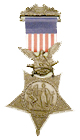 Sergeant Charles M. Holton of Company A was awarded the Medal of Honor for “Capture of flag of 55th Virginia Infantry (C.S.A.). In the midst of the battle with foot soldiers he dismounted to capture the flag.